Patient Overview
Knee pain can start as a minor discomfort and gradually become a problem that affects walking, climbing stairs, exercising and even sleeping. While occasional knee pain may improve with rest, persistent pain and stiffness can sometimes indicate advanced joint damage.
Knee replacement surgery is one of the treatment options considered for people with severe knee joint damage when other treatments no longer provide adequate relief. However, not every person with knee pain needs knee replacement surgery. The decision depends on the severity of the condition, symptoms, diagnostic findings, age, activity level and response to other treatments.
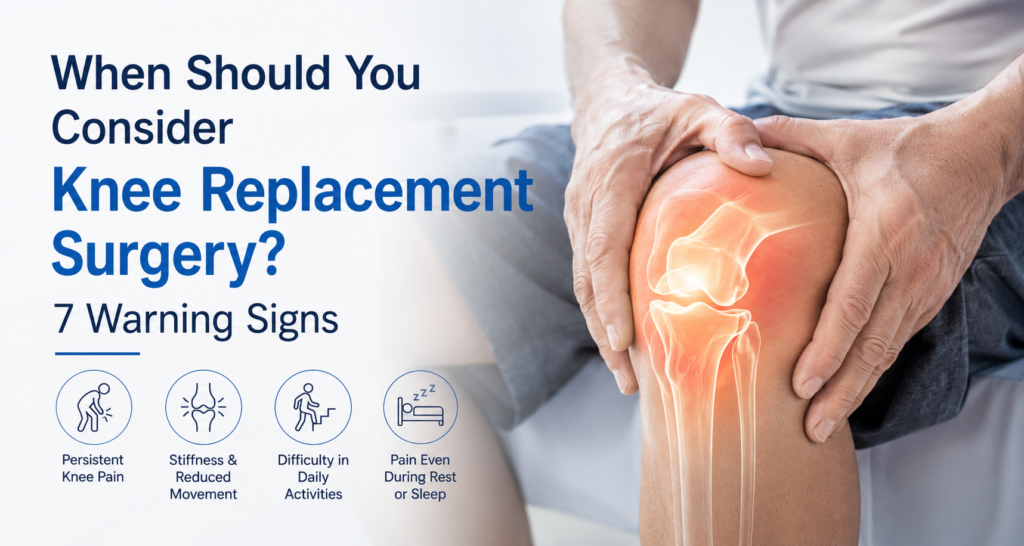
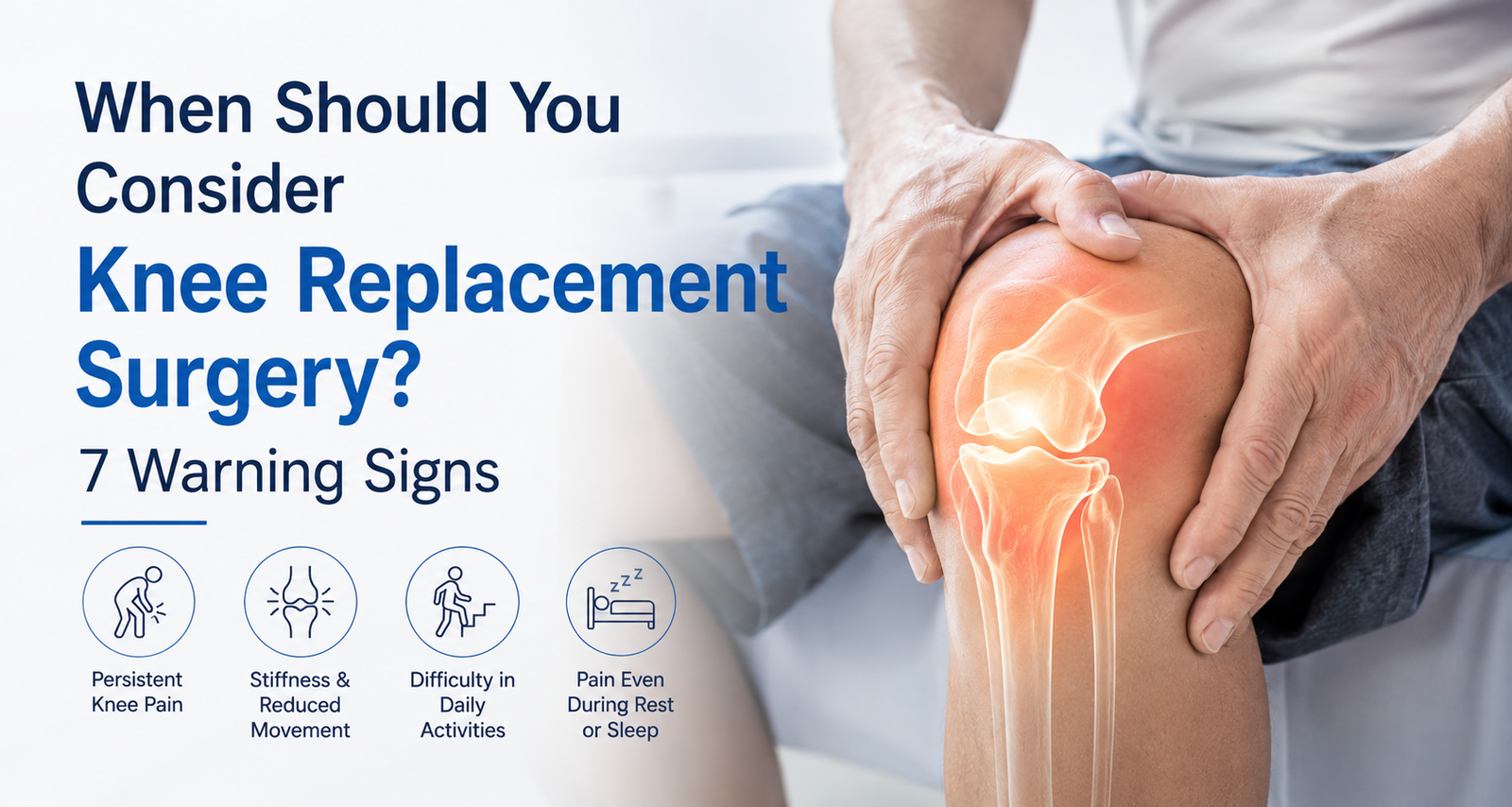
If you are experiencing persistent knee problems, here are seven signs that it may be time to consult an orthopaedic specialist.
The patient had previously been treated for plantar fasciitis elsewhere without noticeable improvement.
As the discomfort increased, routine activities such as walking, climbing stairs, and standing for extended periods became increasingly difficult, affecting both work and daily life.
Clinical Assessment
1. Persistent Knee Pain That Affects Daily Activities
One of the most important warning signs is pain that interferes with your normal routine.
You may notice difficulty with:
- Walking for longer distances
- Climbing or descending stairs
- Getting up from a chair
- Standing for extended periods
- Performing household activities
- Going for regular walks or exercise
When knee pain consistently limits everyday activities, an orthopaedic evaluation can help determine the underlying cause.
2. Pain That Continues Despite Non-Surgical Treatment
Many knee conditions can initially be managed without surgery.
Depending on the diagnosis, treatment may include:
- Physiotherapy
- Exercise and strengthening programmes
- Weight management
- Medicines prescribed by a doctor
- Activity modification
- Other non-surgical treatments recommended by an orthopaedic specialist
If appropriate conservative treatment has been tried but pain and functional limitations continue, your doctor may discuss whether surgical treatment should be considered.
3. Increasing Knee Stiffness and Reduced Movement
Severe arthritis and joint degeneration can progressively reduce the range of movement of the knee.
You may find it increasingly difficult to:
- Fully bend your knee
- Straighten your leg
- Sit comfortably for long periods
- Get in and out of a vehicle
- Squat or kneel
Reduced mobility can affect independence and quality of life. An orthopaedic assessment can help identify whether the stiffness is related to arthritis or another knee condition.
4. Knee Pain That Disturbs Your Sleep
Knee pain that occurs even while resting or sleeping deserves attention.
Some people with advanced joint problems experience pain not only while walking but also when sitting or lying down. Night-time pain can make it difficult to sleep comfortably and may significantly affect quality of life.
If knee pain regularly wakes you up or prevents you from finding a comfortable sleeping position, consider consulting an orthopaedic specialist.
5. Difficulty Walking Because of Knee Pain
Walking should not consistently feel like a struggle because of knee pain.
If you have started reducing your walking distance, avoiding stairs or depending on support because your knee hurts, the condition may be progressing.
Changes in walking patterns can also place additional stress on other joints and muscles. Early assessment can help determine the most appropriate treatment approach.
6. Significant Joint Damage on Imaging
Your symptoms are only one part of the assessment.
An orthopaedic doctor may recommend investigations such as X-rays or other imaging depending on your symptoms. These investigations can help evaluate joint space, cartilage loss, alignment and other structural changes.
In advanced osteoarthritis, significant degeneration of the knee joint may support consideration of knee replacement surgery when it is accompanied by substantial symptoms and functional limitations.
The decision should always be based on an individual clinical evaluation rather than an X-ray alone.
7. Knee Pain Is Affecting Your Quality of Life
Perhaps the most important consideration is how much your knee problem is affecting your life.
If knee pain prevents you from doing activities you previously enjoyed, limits your independence or affects your work and daily routine, it is worth discussing your options with an orthopaedic specialist.
Knee replacement is generally considered when severe joint disease causes significant pain and disability and other appropriate treatments have not provided sufficient relief.
Does Everyone With Knee Arthritis Need Knee Replacement?
No.
Knee arthritis can range from mild to severe, and treatment depends on the individual patient.
Early or moderate cases may often be managed with non-surgical approaches. In more advanced cases, particularly when pain and functional limitations become significant, knee replacement may become an option.
This is why getting an accurate diagnosis is important before deciding on surgery.
What Happens During an Orthopaedic Evaluation?
An orthopaedic specialist will typically assess your symptoms, medical history, physical condition and knee movement. Imaging may also be recommended to understand the condition of the joint.
Based on the findings, your doctor can explain:
- The likely cause of your knee pain
- The severity of joint damage
- Whether non-surgical treatment may help
- Whether surgery should be considered
- What recovery and rehabilitation may involve
At K S Ortho Clinic in Madipakkam, Chennai, knee replacement is one of the clinic’s specialised orthopaedic services. The clinic also provides care for hip replacement, spine conditions, arthroscopy, shoulder replacement and other orthopaedic problems.
Knee Replacement in Chennai
If persistent knee pain is affecting your mobility and daily life, don’t assume that surgery is automatically the only option. The first step is to understand the cause of your symptoms and discuss suitable treatment options with an experienced orthopaedic specialist.
K S Ortho Clinic, located in Madipakkam, Chennai, provides specialised orthopaedic consultation and treatment for knee and joint conditions. Prof. Dr. A. N. Sarath Babu is the orthopaedic surgeon associated with the clinic and has over 12 years of experience according to the clinic’s website.
Frequently Asked Questions
At what age is knee replacement usually considered?
There is no single age at which everyone should undergo knee replacement. The decision depends primarily on the severity of joint damage, symptoms, functional limitations and overall health rather than age alone.
How do I know if my knee pain is serious?
Persistent pain, swelling, stiffness, difficulty walking, reduced movement or pain that affects sleep and daily activities are reasons to consult an orthopaedic specialist.
Can knee arthritis be treated without surgery?
Depending on the severity and cause, many patients may initially benefit from non-surgical treatment such as physiotherapy, exercise, lifestyle changes and medication prescribed by a doctor.
Is knee replacement the only treatment for severe knee pain?
No. Treatment depends on the individual diagnosis. Your orthopaedic specialist can explain the available options and whether knee replacement is appropriate.
How long should I wait before seeing an orthopaedic doctor?
If knee pain persists, repeatedly returns or begins interfering with normal activities, it is better to seek an evaluation rather than continuing to ignore the symptoms.
Take the Next Step for Your Knee Health
Persistent knee pain should not be allowed to gradually limit your mobility and independence. An early orthopaedic evaluation can help identify the cause of your symptoms and provide a clear treatment plan.
If you are experiencing ongoing knee pain in Chennai, consult an orthopaedic specialist to understand whether conservative treatment, rehabilitation or knee replacement may be appropriate for your condition.
K S Ortho Clinic – Madipakkam, Chennai
Specialised care for knee, hip, spine, shoulder, foot and ankle conditions.
Book an appointment with K S Ortho Clinic to discuss your knee pain and treatment options.
Personalised Treatment Plan
As there was no evidence of permanent nerve damage, a conservative treatment approach was recommended. The primary objective was to reduce nerve compression, relieve inflammation, and restore normal foot function.
The treatment plan included custom orthotic insoles to improve foot alignment and reduce stress on the tibial nerve. A structured physiotherapy programme focused on stretching tight structures around the ankle, strengthening the supporting muscles of the foot, improving flexibility, and correcting gait mechanics. Short-term anti-inflammatory medication was prescribed to control pain during the early stages of recovery, while the patient was advised to modify activities that aggravated the symptoms.
Regular follow-up appointments allowed the rehabilitation programme to be adjusted according to the patient’s progress.
Recovery Journey
Within four weeks, the patient reported a significant reduction in burning pain and tingling sensations. Walking became more comfortable, and daily activities could be performed with considerably less discomfort.
After eight weeks of consistent physiotherapy and orthotic use, numbness had almost completely resolved, ankle mobility had improved, and the patient was able to return to regular work without limitations.
By the three-month review, the patient had achieved excellent functional recovery with no recurrence of symptoms. Continued use of supportive footwear and home exercises was advised to minimise the risk of future nerve compression.
Treatment Outcome
The patient’s recovery demonstrated how early diagnosis and targeted conservative management can successfully treat Tarsal Tunnel Syndrome without the need for surgery.
Results Achieved
- Significant reduction in burning pain and nerve irritation
- Complete resolution of tingling and numbness
- Improved foot alignment with custom orthotics
- Restoration of normal walking pattern
- Return to daily activities without pain
- No surgical intervention required
- No recurrence of symptoms during follow-up
Why Choose K S Ortho Chennai?
At K S Ortho Chennai, we provide comprehensive care for foot and ankle conditions using advanced diagnostic techniques and evidence-based treatment protocols. Every patient receives an individualised care plan designed to relieve pain, restore mobility, and improve long-term foot function through both non-surgical and surgical treatment options when necessary.