Introduction
Diabetes is widely known for its effects on blood sugar, the heart, kidneys and eyes. However, its impact on the musculoskeletal system — including bones, joints, muscles and connective tissues — is also important. People living with diabetes may have a higher risk of certain fractures, joint problems, reduced mobility and complications during recovery from injuries.
Diabetes does not automatically mean that a person will develop bone or joint disease. However, understanding the possible effects and recognising problems early can help people make informed decisions about their health.
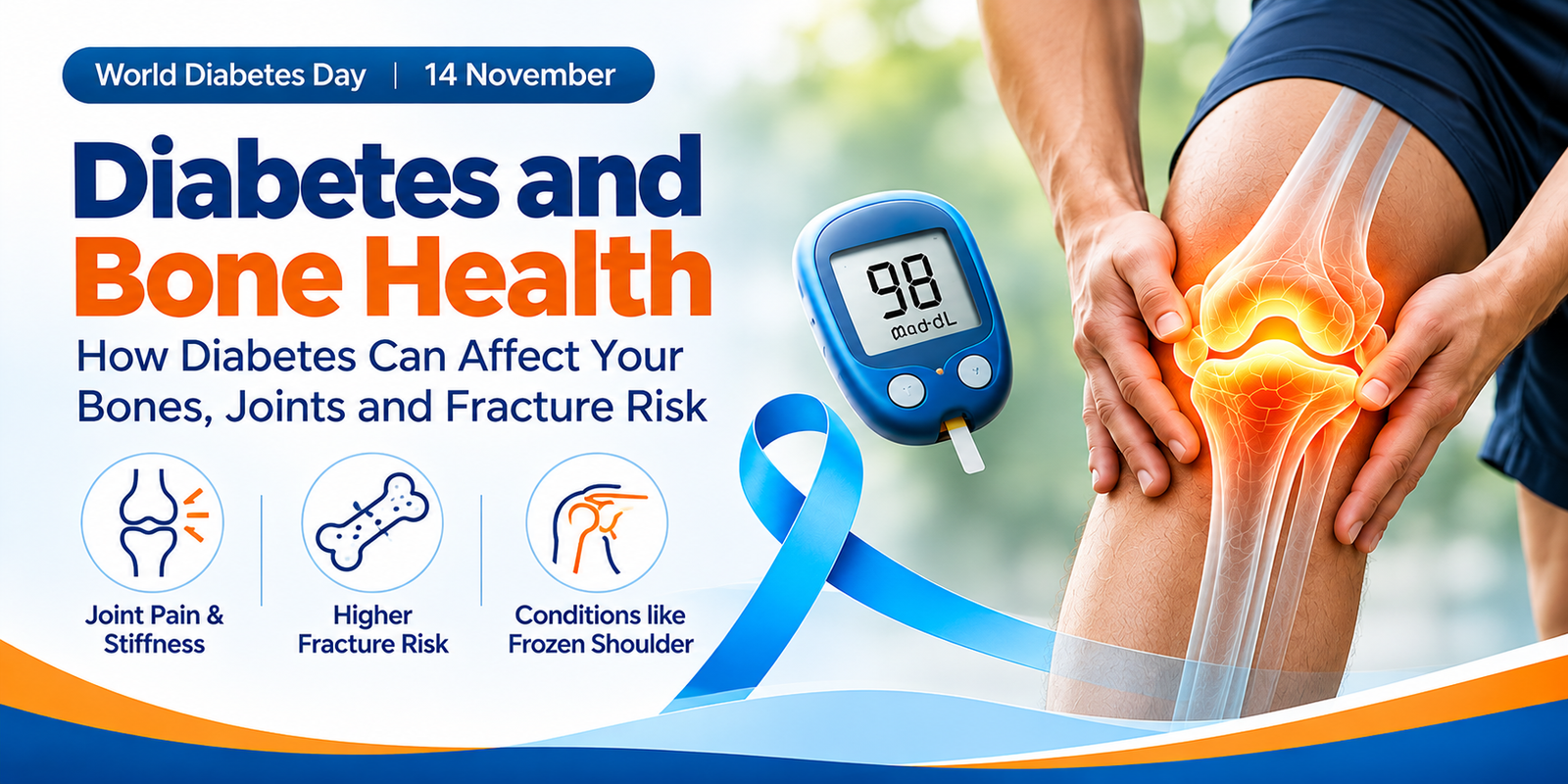
As World Diabetes Day is observed on 14 November, this is a useful opportunity to understand the connection between diabetes and bone and joint health, and why timely medical attention matters.
Can Diabetes Affect Bone and Joint Health?
Yes. Diabetes can affect bone quality, joint function, muscle strength and the body’s ability to recover from certain injuries.
Bones are living tissues that continuously undergo a process of renewal. Old bone is broken down and new bone is formed to maintain strength. Diabetes, particularly when blood glucose levels are not well managed over time, may affect this process.
Research has found that people with diabetes can have an increased risk of fractures. Interestingly, some people with Type 2 diabetes may have normal or even higher bone mineral density while still having a greater risk of fractures. This means that bone density alone may not provide a complete picture of bone strength.
Effect of Diabetes
Diabetes and Increased Fracture Risk
One of the important concerns associated with diabetes is an increased risk of fractures.
A fracture is a break in a bone. It may happen following a fall, an accident or an impact that would not normally cause a serious injury.
People with diabetes may have additional factors that contribute to fracture risk, including:
Changes in bone quality and bone remodelling.
Reduced muscle strength or physical function.
Nerve-related problems that affect balance and sensation.
Vision-related difficulties that increase the likelihood of falls.
Episodes of low blood glucose that may cause dizziness or unsteadiness.
Other health conditions that affect mobility.
Fractures can occur in different parts of the body, including the hip, wrist, ankle and spine.
A fracture should not be ignored simply because the injury appears minor. Persistent pain, swelling, bruising, difficulty bearing weight or restricted movement after an injury should be medically assessed.
How Does Diabetes Affect Bone Strength?
Bone strength depends on more than bone density. The internal structure, quality and ability of bone tissue to repair small areas of damage also matter.
Long-term diabetes may influence bone metabolism and the processes involved in maintaining healthy bone tissue.
In some individuals, prolonged exposure to elevated blood glucose may contribute to changes in the material properties of bone. Diabetes-related complications can also affect physical function and increase the likelihood of falls.
This is one reason why people with diabetes should discuss their overall bone health with their healthcare team, particularly if they have experienced a fracture or have other risk factors.
Can Diabetes Cause Joint Pain and Stiffness?
Diabetes is associated with certain musculoskeletal conditions that can affect joints, tendons and surrounding tissues.
Some people may experience stiffness, restricted movement or discomfort in the hands, shoulders and other joints.
Examples include:
Frozen shoulder
Frozen shoulder, also known as adhesive capsulitis, causes pain and progressive stiffness in the shoulder joint. It can make everyday activities such as reaching overhead, dressing or reaching behind the back difficult.
Frozen shoulder is reported more frequently in people with diabetes than in the general population.
Limited joint mobility
Some people with long-standing diabetes develop stiffness in the joints, particularly in the hands. This can make it difficult to fully straighten or bend the fingers.
Tendon-related problems
Diabetes may also be associated with tendon conditions, including trigger finger and other problems involving the tissues that connect muscles to bones.
Not every episode of joint pain in a person with diabetes is caused by diabetes. Persistent pain or restricted movement needs an appropriate clinical assessment to identify the actual cause.
Why Can Recovery from an Injury Be More Complicated?
Recovery from an orthopaedic injury depends on several factors, including the type of injury, blood supply, tissue health, nutrition, activity levels and general medical condition.
In people with diabetes, certain complications may influence the healing process.
For example:
Poorly controlled blood glucose may affect the body’s normal healing processes.
Reduced sensation due to diabetic neuropathy may make it harder to recognise repeated pressure or injury.
Circulation-related problems may affect tissue health.
Other diabetes-related conditions may influence rehabilitation and recovery.
This does not mean that people with diabetes cannot recover well from fractures or orthopaedic procedures. It means that their overall health and diabetes management should be considered when planning treatment.
If you have diabetes and sustain an injury, inform your treating doctor about your condition, medications and any known complications.
Does Diabetes Increase the Risk of Falls?
Diabetes can contribute to factors that affect balance and mobility.
For example, diabetic neuropathy may reduce sensation in the feet and lower limbs. A person may not notice changes in the ground beneath their feet or may have difficulty sensing their foot position.
Other possible contributors include:
Reduced muscle strength.
Vision problems.
Dizziness associated with low blood glucose.
Reduced confidence while walking.
Pain or stiffness that changes the way a person moves.
Falls are particularly concerning among older adults because they can lead to fractures and a longer recovery period.
Simple precautions may help reduce the risk of falls:
Keep walking areas free from loose rugs and clutter.
Use adequate lighting at home.
Wear comfortable, supportive footwear.
Follow prescribed exercises to maintain strength and balance.
Attend regular medical reviews.
Discuss dizziness, repeated falls or changes in walking ability with a healthcare professional.
What Can People with Diabetes Do to Support Bone and Joint Health?
Bone and joint health should be considered as part of overall diabetes care.
The following habits may support general musculoskeletal health:
Stay physically active
Regular physical activity can help maintain muscle strength, mobility and balance. Walking, suitable resistance exercises and weight-bearing activities may be beneficial, depending on a person’s health and physical ability.
People with existing joint pain, neuropathy, foot problems or a history of fractures should seek guidance before starting a new exercise programme.
Follow an appropriate nutrition plan
A balanced diet supports general health and provides nutrients needed for bone maintenance.
Calcium and vitamin D are important for bone health. However, supplements should not be started automatically. A healthcare professional can advise whether supplementation is needed based on dietary intake, medical history and test results.
Monitor blood glucose
Following the diabetes management plan recommended by the treating doctor is important. Good diabetes management may help reduce the risk of complications that can affect mobility, sensation and recovery.
Avoid smoking
Smoking can negatively affect bone health and healing. People who smoke may benefit from discussing cessation support with their healthcare provider.
Do not ignore persistent pain
Pain, swelling, stiffness or difficulty walking should not automatically be attributed to diabetes or ageing. An accurate diagnosis helps determine whether the problem involves a joint, bone, tendon, muscle or nerve.
When Should a Person with Diabetes Consult an Orthopaedic Doctor?
People with diabetes should consider an orthopaedic assessment when they experience:
Persistent pain in the knee, hip, shoulder, wrist or ankle.
Joint stiffness that affects everyday activities.
Swelling or tenderness following an injury.
Difficulty walking or bearing weight.
Repeated falls or changes in balance.
Suspected fracture after a fall or accident.
Reduced movement in a joint.
Pain that continues despite initial care.
Seek urgent medical attention if there is severe pain, visible deformity, inability to bear weight after an injury, or a hot, red and swollen joint accompanied by fever.
A timely assessment can help identify the cause and determine the appropriate treatment.
How Are Diabetes-Related Bone and Joint Problems Evaluated?
The assessment depends on the symptoms and suspected condition.
An orthopaedic doctor may consider:
Medical history: The doctor may ask about the duration of diabetes, current treatment, previous injuries, existing complications and the nature of the symptoms.
Physical examination: This may include checking joint movement, muscle strength, tenderness, swelling, walking pattern and balance.
Imaging: X-rays may be recommended to assess fractures, joint changes or bone alignment. Other investigations, such as MRI, may be considered when soft-tissue or more complex joint problems need evaluation.
Additional investigations: Depending on the situation, blood tests or bone-health assessments may be recommended in coordination with the patient’s other treating doctors.
Not every patient requires every test. Investigations are selected according to the clinical findings.
What Treatment Options May Be Recommended?
Treatment depends on the diagnosis, severity of the problem, general health and diabetes-related complications.
Depending on the condition, the treatment plan may include:
Activity modification and appropriate rest.
Physiotherapy and supervised strengthening exercises.
Medication when clinically appropriate.
Supportive devices or braces in selected cases.
Fracture management, including immobilisation or surgery when required.
Rehabilitation to restore strength, movement and function.
Coordination with the patient’s diabetes care team.
For patients who require surgery, factors such as blood glucose management, circulation, infection risk and other medical conditions may be considered as part of pre-operative planning.
The aim is to address the underlying orthopaedic problem while taking the person’s overall health into account.
Orthopaedic Care in Chennai
Diabetes management involves more than monitoring blood glucose. Bone health, joint movement, muscle strength and mobility also deserve attention, particularly as people grow older or develop other health conditions.
At K S Ortho Clinic, Madipakkam, Chennai, patients can seek orthopaedic evaluation for bone, joint and mobility-related concerns.
Prof. Dr. A. N. Sarath Babu, an orthopaedic surgeon, provides consultations for a range of orthopaedic conditions. The clinic’s services include orthopaedic consultations, fracture care, joint-related treatment and physiotherapy.
If you are experiencing persistent joint pain, stiffness or difficulty moving, an appropriate clinical assessment can help identify the cause and guide the next steps.
Conclusion
Diabetes can influence bone quality, fracture risk, joint mobility and recovery from injuries. While not everyone with diabetes will develop orthopaedic complications, understanding these possible effects can help people recognise symptoms and seek timely care.
This World Diabetes Day, remember that long-term diabetes care should include attention to mobility, strength and bone and joint health. Early evaluation and an appropriate treatment plan can help support a safer, more active life.
Medical disclaimer: This article is for general educational purposes and does not replace individual medical advice, diagnosis or treatment. People with diabetes should consult their treating healthcare professionals for recommendations based on their health and medical history.
Can Knee Pain After 40 Be Treated Without Surgery?
In many situations, treatment begins with non-surgical approaches.
Depending on the diagnosis, these may include:
A structured physiotherapy programme may focus on:
Strengthening the muscles around the knee and hip
Improving flexibility
Improving balance
Correcting movement patterns
Gradually returning to appropriate activities
Exercise
Appropriate exercise can help maintain muscle strength and joint function.
The right exercise programme depends on your condition. Exercises that are suitable for one person may not be appropriate for another.
Weight Management
If excess body weight is contributing to knee stress, weight management may form part of a broader treatment plan.
Activity Modification
Your doctor or physiotherapist may recommend temporarily modifying activities that aggravate the pain while maintaining appropriate movement.
Medication
Pain-relieving or anti-inflammatory medicines may be recommended in some situations. These should be used according to medical advice, particularly if you have other health conditions or take other medicines.
Other Treatments
Depending on the diagnosis, your orthopaedic specialist may discuss additional treatment options, including injections or surgical procedures.
The treatment should be based on the specific condition rather than simply the patient’s age.
Does Knee Pain After 40 Mean I Need Knee Replacement?
No.
Knee pain after 40 does not automatically mean that knee replacement is required.
Knee replacement is generally considered in people with significant joint damage and persistent symptoms that substantially affect function and quality of life, particularly when appropriate non-surgical treatments have not provided sufficient relief.
The decision requires an individual assessment based on symptoms, examination findings, imaging and overall health.
This is why it is important not to diagnose yourself based solely on an X-ray, age or online information.
How Can You Protect Your Knees After 40?
Maintaining healthy habits can support long-term joint health.
Consider:
Staying physically active
Maintaining a healthy body weight
Building leg and hip strength
Avoiding sudden increases in exercise intensity
Using proper technique during exercise
Addressing previous injuries appropriately
Taking breaks from prolonged sitting
Maintaining mobility and flexibility
Seeking professional advice when persistent symptoms develop
The goal is not to avoid movement because of your age. Instead, the focus should be on maintaining appropriate strength, mobility and activity.
Knee Pain Treatment in Chennai
If you are experiencing persistent knee pain after 40, an orthopaedic evaluation can help identify whether the symptoms are related to osteoarthritis, an old injury, muscle weakness, meniscus problems or another condition.
K S Ortho Clinic in Madipakkam, Chennai provides orthopaedic care for knee and joint conditions, including knee replacement and other treatment options. The clinic’s website identifies Prof. Dr. A. N. Sarath Babu as its orthopaedic surgeon and states that he has over 12 years of experience.
For patients in and around Madipakkam and South Chennai, a local orthopaedic consultation can provide an opportunity to discuss persistent knee symptoms and determine whether further assessment or treatment is appropriate.
Frequently Asked Questions
1. Does diabetes make bones weak?
Diabetes can affect bone quality and increase fracture risk. However, the effect varies between individuals. Bone density may not fully reflect fracture risk, particularly in people with Type 2 diabetes.
2. Can Type 2 diabetes increase the risk of fractures?
Yes. Studies have found an increased fracture risk among people with Type 2 diabetes, even when bone mineral density is not low.
3. Can diabetes cause frozen shoulder?
Frozen shoulder is more common among people with diabetes. It causes pain and stiffness that can restrict shoulder movement and interfere with daily activities.
4. Does diabetes affect fracture healing?
Diabetes-related factors, including blood glucose control, circulation and other complications, may influence healing. The effect depends on the individual and the type of fracture.
5. Should people with diabetes undergo bone density testing?
Not everyone with diabetes requires a bone density test. The decision depends on age, fracture history, other risk factors and the treating doctor’s assessment.
6. What exercise is suitable for people with diabetes and joint pain?
The appropriate exercise depends on the person’s health, joint condition, sensation, balance and physical ability. Walking, strength training and balance exercises may be considered, but a suitable plan should be discussed with a healthcare professional.
7. When should someone with diabetes see an orthopaedic specialist?
Consult an orthopaedic specialist for persistent joint pain, stiffness, swelling, suspected fractures, difficulty walking or reduced movement that affects daily activities.