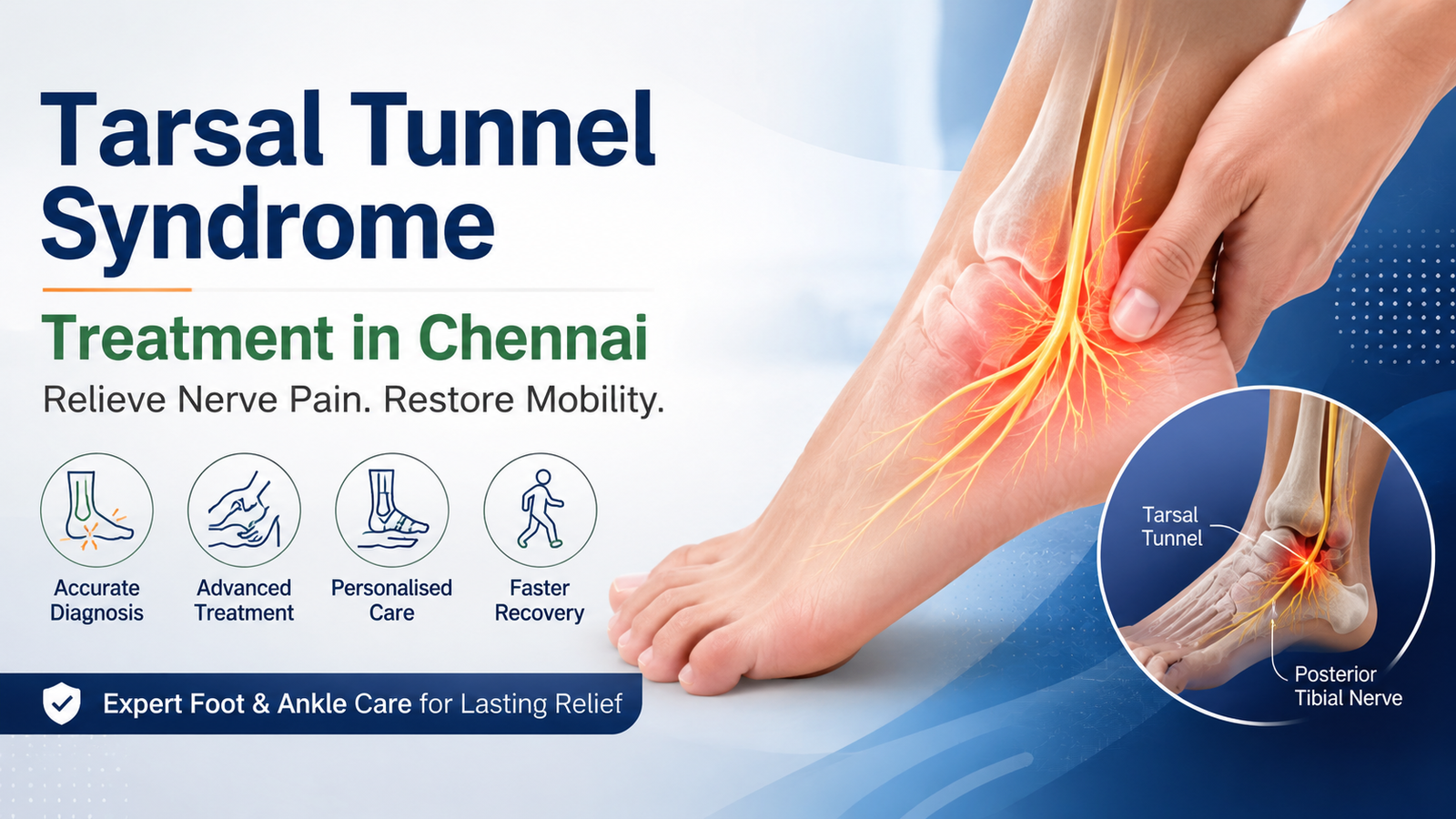
Tarsal Tunnel Syndrome is a painful condition caused by compression of the posterior tibial nerve as it passes through the tarsal tunnel on the inside of the ankle. Similar to carpal tunnel syndrome in the wrist, this nerve compression can lead to burning pain, tingling, numbness, and weakness in the foot.
If left untreated, Tarsal Tunnel Syndrome can affect mobility, balance, and daily activities. At K S Ortho Chennai, we provide comprehensive diagnosis and personalized treatment plans to relieve nerve compression and restore pain-free movement.
What Is Tarsal Tunnel Syndrome?
Tarsal Tunnel Syndrome is a nerve compression disorder that occurs when the posterior tibial nerve becomes trapped within the tarsal tunnel, a narrow passage located behind the inner ankle bone. This tunnel contains tendons, ligaments, blood vessels, and nerves that work together to support normal movement of the foot.
When swelling, injury, or structural abnormalities increase pressure inside the tunnel, the nerve becomes irritated. As a result, patients may experience pain, numbness, tingling, or weakness that gradually worsens over time.
Because the symptoms often resemble plantar fasciitis or diabetic neuropathy, many patients continue to live with discomfort without receiving the correct diagnosis. A detailed orthopaedic assessment helps identify the exact cause and ensures appropriate treatment.
Common Symptoms of Tarsal Tunnel Syndrome
The symptoms of Tarsal Tunnel Syndrome can vary from mild discomfort to severe nerve pain. Initially, patients may notice occasional tingling after prolonged standing or walking. As the condition progresses, the pain may become more frequent and interfere with daily activities.
Signs to watch for include:
- Burning pain in the inner ankle or sole of the foot
- Tingling or "pins and needles" sensation
- Numbness in the heel, arch, or toes
- Sharp shooting pain radiating into the foot
- Weakness while walking
- Increased discomfort after physical activity
- Pain that may worsen at night
What Causes Tarsal Tunnel Syndrome?
Several medical conditions can increase pressure on the posterior tibial nerve. Understanding the underlying cause is essential because successful treatment depends on correcting the source of the compression.
Patients commonly develop Tarsal Tunnel Syndrome due to flat feet, previous ankle sprains, fractures, arthritis, tendon inflammation, ganglion cysts, varicose veins, or diabetes-related swelling around the nerve. In some cases, repetitive strain from prolonged standing or high-impact activities may also contribute to the condition.
At K S Ortho Chennai, identifying these contributing factors allows us to create an individualised treatment plan that addresses both the symptoms and their underlying cause.
How Is Tarsal Tunnel Syndrome Diagnosed?
An accurate diagnosis begins with a detailed consultation and physical examination. Our specialists carefully assess your symptoms, walking pattern, foot alignment, and areas of tenderness before recommending further investigations.
Depending on your condition, advanced diagnostic tests may include digital X-rays, ultrasound, MRI scans, nerve conduction studies (NCS), or electromyography (EMG). These investigations help determine the severity of nerve compression while excluding other conditions such as plantar fasciitis, stress fractures, or peripheral neuropathy.
By combining clinical expertise with advanced imaging, we ensure that every patient receives the most appropriate treatment.
| Diagnostic Test | Purpose |
|---|---|
Clinical Examination |
Assess nerve irritation and foot alignment |
Digital X-ray |
Identify bone abnormalities |
Ultrasound |
Evaluate soft tissue swelling |
MRI Scan |
Detect structural causes of nerve compression |
Nerve Conduction Study |
Measure nerve function |
Treatment depends on the severity of symptoms and the cause of nerve compression. Many patients respond well to conservative management, particularly when diagnosed early.
Initially, treatment focuses on reducing inflammation, relieving nerve pressure, and restoring normal foot function. This may include physiotherapy, activity modification, anti-inflammatory medication, custom orthotic insoles, supportive footwear, and ankle bracing. These treatments often provide significant relief while preventing the condition from worsening.
When symptoms persist despite conservative care or diagnostic investigations reveal significant nerve compression, surgery may be recommended. Tarsal Tunnel Release Surgery involves carefully releasing the tissues compressing the posterior tibial nerve, allowing normal nerve function to return. Modern surgical techniques aim to minimise tissue trauma while promoting faster recovery.
Your personalised treatment plan may include:
- Comprehensive orthopaedic assessment
- Advanced diagnostic imaging
- Custom foot orthotics
- Physiotherapy and rehabilitation
- Medication for pain and inflammation
- Tarsal Tunnel Release Surgery (when required)
Recovery and Rehabilitation
Recovery is a gradual process that depends on the severity of nerve compression and the chosen treatment approach. Most patients experience progressive improvement in pain, sensation, and walking ability over several weeks.
For surgical patients, rehabilitation includes guided physiotherapy, strengthening exercises, gait training, and scheduled follow-up assessments. Consistently following your rehabilitation programme helps restore normal foot function and reduces the risk of recurrence.
Book Your Consultation Today
Persistent ankle pain, burning sensations, tingling, or numbness should never be ignored. Early diagnosis can prevent long-term nerve damage and significantly improve treatment outcomes.
If you are searching for Tarsal Tunnel Syndrome treatment in Chennai, the specialists at K S Ortho Chennai are here to help. Schedule your consultation today and receive a personalised treatment plan designed to relieve pain, restore movement, and get you back on your feet with confidence.