Introduction
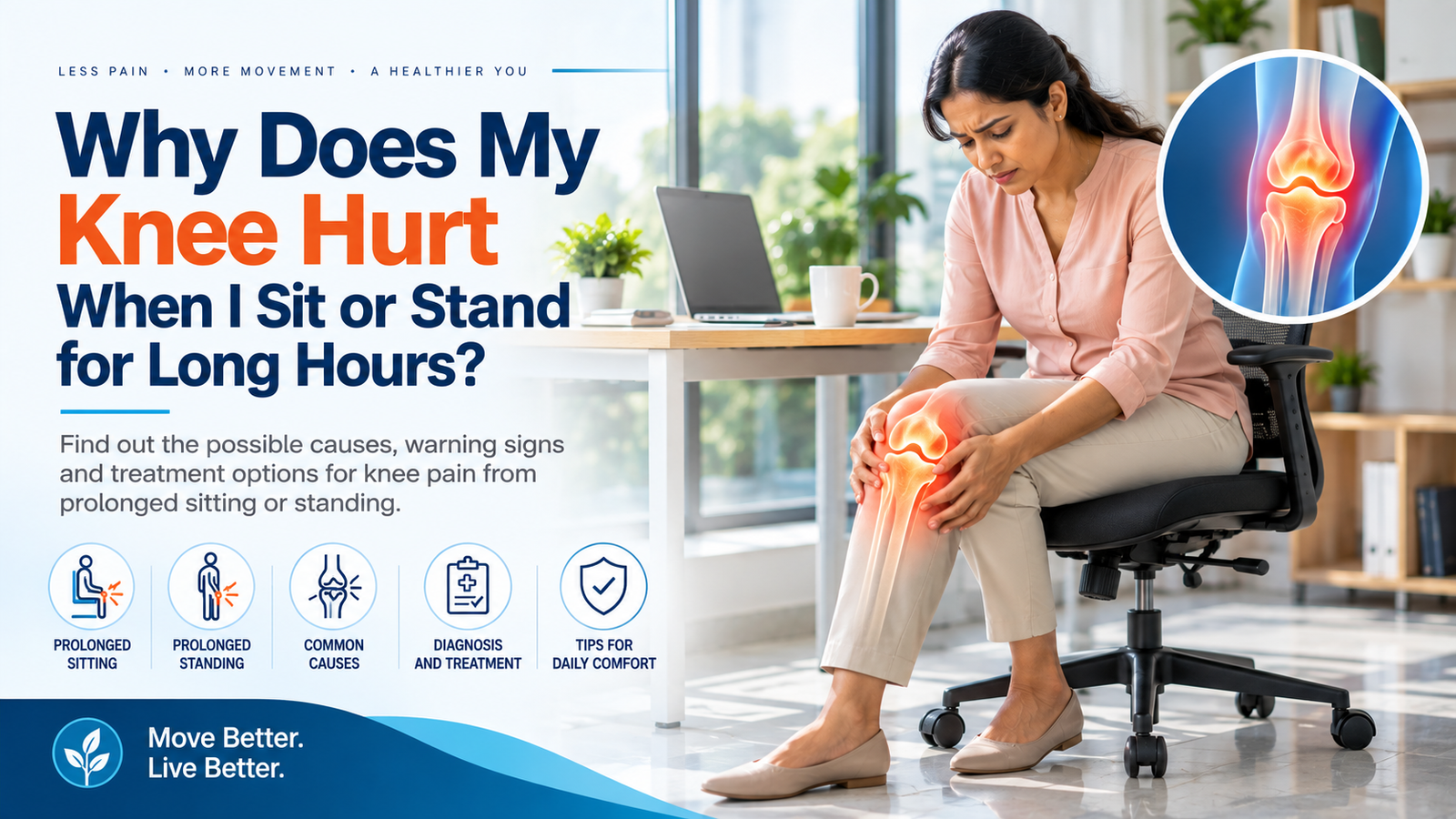
Do your knees hurt after sitting at your desk for several hours? Or do you experience knee pain after standing for a long time at work, while cooking, shopping or travelling?
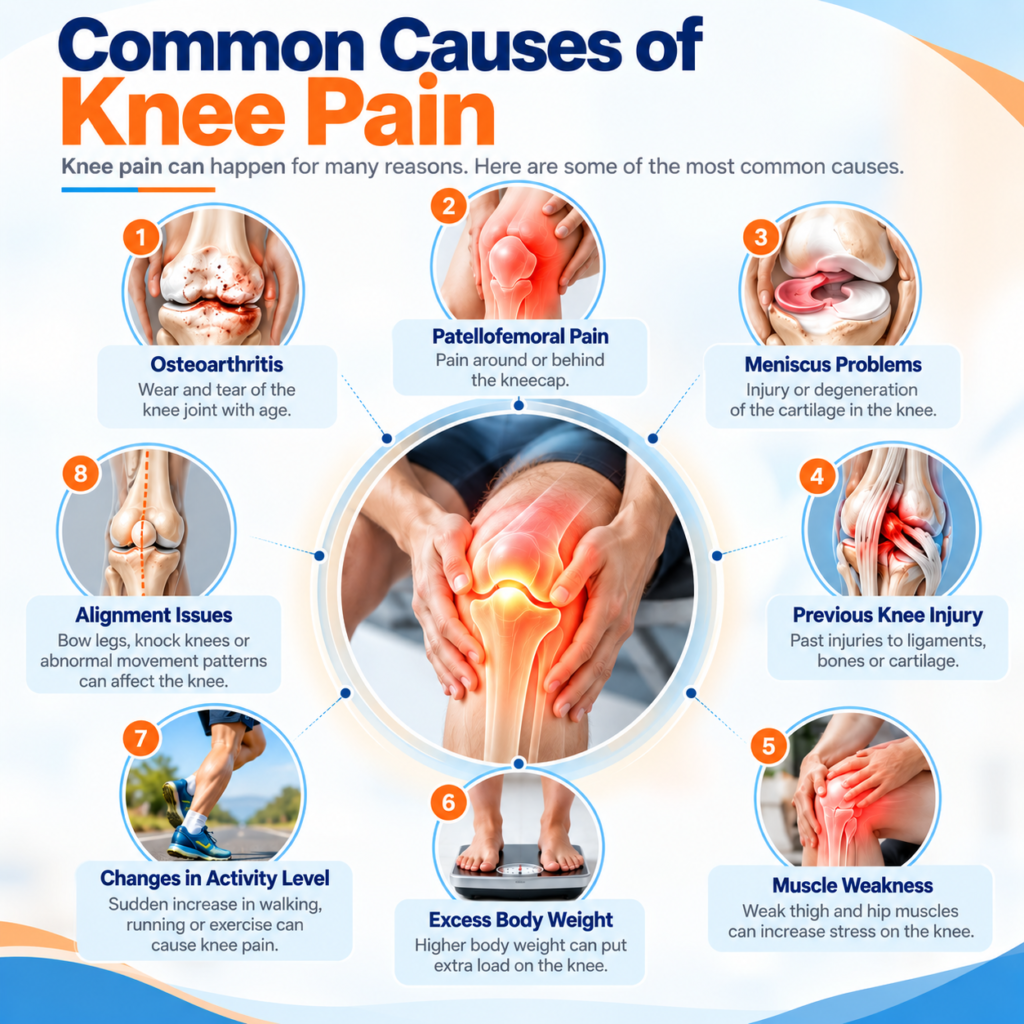
Knee pain associated with prolonged sitting or standing is common, but the reason behind it can vary from person to person. Sometimes the discomfort may be related to stiffness and reduced movement. In other cases, it may be associated with osteoarthritis, patellofemoral pain, muscle weakness, previous injury or another condition affecting the knee.
Understanding why your knee hurts when you sit or stand for long hours can help you identify when simple activity changes may be useful and when professional assessment may be appropriate.
Why Does My Knee Hurt After Sitting for a Long Time?
One common complaint is knee pain or stiffness after remaining seated for an extended period.
You may notice that:
Your knee feels stiff when you first stand
It takes a few steps before the knee feels comfortable
Bending the knee for a long time causes discomfort
The pain is worse after sitting through a meeting or journey
You experience discomfort after working at a desk
You need to move the knee before walking comfortably
This pattern can occur for different reasons, so persistent symptoms should not be attributed to one condition without an assessment.
Osteoarthritis is an important cause of knee pain and stiffness, particularly among middle-aged and older adults.
Changes in the joint can cause discomfort during movement and stiffness after periods of inactivity.
A person may experience:
Pain when starting to walk after sitting
Stiffness
Pain while climbing stairs
Reduced range of motion
Swelling
Grinding or grating sensations
Symptoms can vary considerably between individuals.
If knee pain after sitting becomes frequent or progressively worse, an orthopaedic evaluation can help determine whether osteoarthritis or another condition may be involved.
2. Patellofemoral Pain
Patellofemoral pain refers to pain around or behind the kneecap.
It may become more noticeable during activities that place stress on the area, including:
Climbing stairs
Squatting
Running
Bending the knee
Sitting with the knee bent for an extended period
Some people describe this as discomfort around the front of the knee rather than deep inside the joint.
Muscle weakness or altered movement patterns may contribute to symptoms in some patients.
3. Muscle Weakness
The muscles surrounding the knee and hip play an important role in controlling movement.
If the quadriceps, hamstrings or hip muscles are weak, everyday activities can place greater demands on the knee.
Long periods of inactivity can contribute to reduced muscle conditioning.
This does not mean that every person with a desk job will develop knee pain, but if you already have symptoms, a physiotherapist may assess your strength, flexibility and movement patterns.
4. Previous Knee Injury
An old knee injury may continue to affect how the joint functions.
Previous ligament injuries, meniscus tears, cartilage injuries or fractures can sometimes contribute to pain or degenerative changes later.
If you have a history of knee injury and are now experiencing pain after sitting or standing, tell your orthopaedic doctor about the previous injury.
This information can be important when evaluating your current symptoms.
Why Does My Knee Hurt When I Stand for a Long Time?
Standing for long periods places continuous load on the lower limbs.
You may experience knee discomfort if you spend several hours:
Standing at work
Cooking
Shopping
Travelling
Waiting in queues
Working in a standing position
Performing repetitive tasks
However, prolonged standing alone does not tell us what the underlying condition is.
Pain may be associated with joint degeneration, muscle fatigue, alignment issues, previous injury or other musculoskeletal problems.
The pattern of pain is important.
For example, if the pain occurs only after prolonged activity and improves with rest, the management may differ from someone who experiences persistent pain even while resting.
Knee Pain After Sitting vs Knee Pain After Standing
The timing of your symptoms can provide useful information.
Pain Mainly After Sitting
You may notice:
Stiffness when getting up
Pain during the first few steps
Discomfort after long meetings
Pain after driving
Difficulty straightening the knee immediately
Pain Mainly After Standing
You may notice:
Gradually increasing discomfort
Knee fatigue
Pain after long periods of walking or standing
Swelling after activity
Reduced tolerance for prolonged standing
Pain During Both Sitting and Standing
If your knee hurts during both prolonged sitting and prolonged standing, particularly if it also hurts during walking or at night, an assessment may be appropriate.
Is Sitting Too Long Bad for Your Knees?
Sitting for long periods is not necessarily harmful to everyone, but prolonged inactivity can contribute to stiffness and reduced muscle conditioning.
A practical approach is to avoid remaining in the same position for several hours without movement.
If your work involves sitting at a desk, consider:
Standing up periodically
Taking short walking breaks
Changing position regularly
Performing appropriate mobility exercises
Maintaining a comfortable workstation setup
Avoiding prolonged positions that consistently trigger pain
These measures are general activity strategies and should not replace medical assessment when pain is persistent.
Is Standing Too Long Bad for Your Knees?
Standing for extended periods can make existing knee symptoms more noticeable.
If your job requires prolonged standing, practical measures may include:
Changing position regularly
Taking appropriate short breaks
Wearing comfortable, supportive footwear
Using a suitable work surface
Avoiding unnecessary repetitive squatting
Following an appropriate strengthening programme
If pain persists despite these adjustments, consult an orthopaedic specialist.
When Should You See a Doctor for Knee Pain?
Not every episode of knee discomfort requires an immediate specialist visit.
However, you should consider an orthopaedic evaluation if:
Pain continues for several weeks
Symptoms are getting worse
You develop persistent swelling
Your knee repeatedly feels unstable
You cannot fully bend or straighten the knee
Pain interferes with walking
You have difficulty climbing stairs
Pain affects sleep
Your knee repeatedly locks or catches
Symptoms began after an injury
You have significant difficulty bearing weight
Urgent medical attention may be appropriate after a significant injury, especially if there is severe swelling, deformity, inability to bear weight or major loss of movement.
How Is the Cause of Knee Pain Diagnosed?
Diagnosis starts with understanding your symptoms.
An orthopaedic specialist may ask about:
How long you have had the pain
Whether it occurs while sitting, standing or walking
Where the pain is located
Whether there is swelling
Whether you hear clicking or grinding
Whether you have had previous injuries
Your activity level
Your work routine
Whether stairs make the pain worse
Whether you experience morning stiffness
A physical examination may assess knee movement, strength, stability, alignment and tenderness.
Depending on the clinical findings, an X-ray or other imaging may be recommended.
Imaging is useful, but it should be interpreted together with your symptoms and physical examination rather than being considered in isolation.
Can Knee Pain From Sitting or Standing Be Treated Without Surgery?
Many knee conditions are initially managed with non-surgical treatment.
Depending on the diagnosis, treatment may include:
Physiotherapy may help improve:
Muscle strength
Flexibility
Joint movement
Balance
Functional movement
At K S Ortho Clinic, physiotherapy services include exercise therapy and other rehabilitation approaches for musculoskeletal conditions.
Exercise and Strengthening
Appropriate strengthening can help support the muscles around the knee.
However, exercises should be selected according to your condition and tolerance.
If an exercise consistently increases pain, seek professional guidance rather than pushing through significant discomfort.
Activity Modification
Small changes to your daily routine can sometimes help reduce aggravating activities.
For example, someone who sits for prolonged periods may benefit from regular movement breaks.
Someone who stands for several hours may need to modify the duration or frequency of standing when possible.
Weight Management
For people carrying excess weight, weight management may form part of a comprehensive approach to reducing stress on the knee and improving overall health.
Medication
Depending on the diagnosis and individual health circumstances, a doctor may recommend appropriate medication for pain or inflammation.
Medication should be taken according to medical advice.
Injections or Surgery
For certain conditions, an orthopaedic specialist may discuss injections or surgical procedures.
These treatments are not appropriate for every person with knee pain. The decision depends on the diagnosis, severity of symptoms, clinical findings and response to other treatments.
Can Knee Pain From Sitting or Standing Lead to Knee Replacement?
Not necessarily.
Pain after prolonged sitting or standing does not automatically mean that you have advanced arthritis or need knee replacement.
Knee replacement is generally considered for selected patients with significant joint damage, persistent symptoms and substantial functional limitations when appropriate non-surgical treatment has not provided adequate relief.
A proper clinical assessment is therefore important before considering surgery.
How Can You Reduce Knee Discomfort During Long Work Hours?
If your daily routine involves sitting or standing for extended periods, consider building movement into your day.
If You Work Sitting Down
Try to:
Change position regularly
Take short walking breaks
Avoid staying in one position for several hours
Maintain appropriate workstation ergonomics
Follow a suitable exercise programme
If You Work Standing Up
Try to:
Change position regularly
Take appropriate breaks
Use comfortable footwear
Avoid unnecessary repetitive movements
Follow a strengthening programme if recommended
The goal is not to eliminate sitting or standing. It is to avoid excessive periods of static positioning and maintain appropriate movement.
Frequently Asked Questions
Why does my knee hurt when I stand up after sitting?
Pain or stiffness when standing after prolonged sitting can occur for several reasons, including osteoarthritis, patellofemoral pain, muscle weakness or other knee conditions. Persistent symptoms should be assessed rather than self-diagnosed.
Why do my knees hurt after sitting for a long time?
Keeping the knee in one position for an extended period may make stiffness or an existing knee condition more noticeable. Osteoarthritis and patellofemoral pain are among the possible causes.
Why does my knee hurt when I stand for long hours?
Prolonged standing can increase the load and fatigue experienced by the lower limbs and may aggravate an existing knee condition. The underlying cause needs to be considered if symptoms are persistent.
Is knee pain from sitting a sign of arthritis?
It can be associated with osteoarthritis, but it is not proof of arthritis. Other conditions can cause similar symptoms.
Should I exercise if my knees hurt after sitting?
Appropriate exercise can be useful for many knee conditions, particularly strengthening and mobility work. However, the appropriate exercises depend on the cause of the pain.
When should I see an orthopaedic doctor?
Consider an evaluation if the pain persists, worsens, affects walking or stairs, causes swelling or instability, interferes with sleep, or follows an injury.
Knee Pain Treatment in Madipakkam, Chennai
If you live in Madipakkam or South Chennai and are experiencing persistent knee pain while sitting, standing, walking or climbing stairs, an orthopaedic consultation can help identify the underlying cause.
K S Ortho Clinic, Madipakkam, Chennai, provides orthopaedic care including knee treatment, knee replacement, physiotherapy and other musculoskeletal services.
The clinic is located at No. 74B, Ponniamman Koil Street, Madipakkam, Chennai – 600091, according to its current contact information.
An individual assessment can help determine whether your symptoms are related to arthritis, muscle weakness, an old injury, patellofemoral pain or another knee condition.
Conclusion
Knee pain after sitting or standing for long hours can have several possible causes. It may be related to stiffness, muscle weakness, osteoarthritis, previous injury, patellofemoral pain or another condition affecting the knee.
If the discomfort is occasional and improves with movement or rest, simple activity modifications may help. However, persistent or worsening pain should not be ignored.
Understanding the underlying cause is more important than simply treating the symptom. An orthopaedic evaluation can help determine what is affecting your knee and whether physiotherapy, exercise, lifestyle changes, medication, injections or another treatment approach may be appropriate.
If knee pain is interfering with your work, walking, stairs or everyday activities, consider consulting an orthopaedic specialist in Chennai for an individual assessment.