Introduction
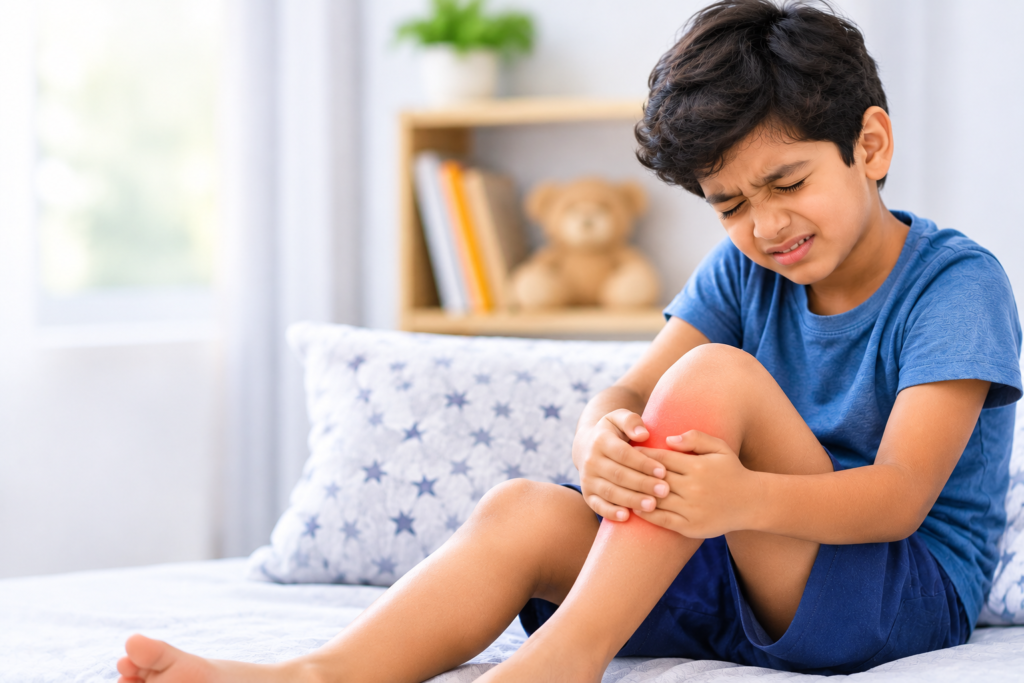
Children often complain of leg pain while growing up. Sometimes the discomfort appears after a day of playing, running or participating in sports. In other cases, a child may wake up at night complaining that their legs hurt.
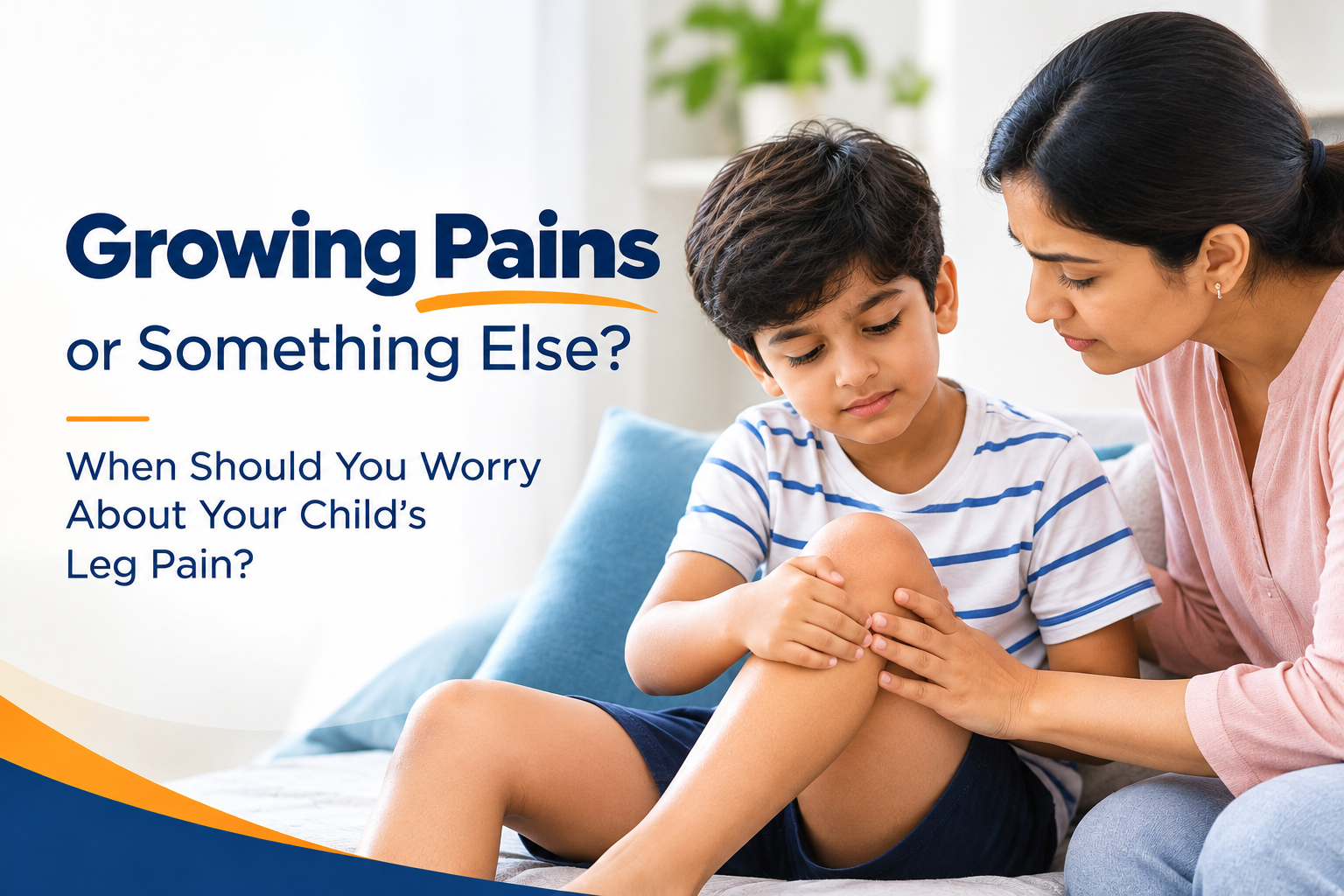
Many parents assume that these symptoms are simply growing pains. While growing pains are common and usually harmless, not every episode of leg pain in a child is caused by growth.
Persistent pain, limping, swelling, joint stiffness or difficulty walking may indicate an injury or another medical condition that needs attention.
Understanding the difference between typical growing pains and symptoms that require medical assessment can help parents make informed decisions.
As World Children’s Day is observed on 20 November, it is a good time to focus on children’s physical well-being, healthy movement and the importance of recognising symptoms early.
Why Does My Child Complain of Leg Pain?
There are several possible reasons why a child may experience leg pain.
1. Growing pains
Growing pains are a common explanation for recurring leg aches in children.
The discomfort usually affects both legs, particularly the thighs, calves or areas behind the knees. It often appears later in the day or at night.
Children generally do not have a limp or difficulty walking because of typical growing pains.
2. Muscle strain after physical activity
Running, jumping, cycling and playing sports can place repeated demands on muscles.
A child who has suddenly increased their activity level may develop muscle soreness or a mild strain.
Muscle-related discomfort may be more noticeable when the child moves or uses the affected muscle.
Rest and gradual return to activity may help minor strains, but severe or persistent pain should be assessed.
Children who participate in football, cricket, badminton, basketball and other activities may experience injuries involving muscles, ligaments, tendons or bones.
Possible injuries include:
Sprains affecting ligaments.
Muscle strains.
Bruises following an impact.
Fractures.
Injuries around the knee or ankle.
Pain that starts suddenly during activity, especially after a fall, twist or collision, should not automatically be treated as growing pains.
4. Foot and lower-limb alignment concerns
Some children have differences in the way their feet or legs are positioned while standing and walking.
Examples include certain forms of flat feet, inward or outward turning of the feet, and variations in leg alignment.
Many childhood alignment variations improve naturally as children develop. However, persistent pain, an unusual walking pattern or difficulty participating in activities may require an assessment.
5. Joint inflammation or other medical conditions
Pain affecting a joint may have causes that are different from typical growing pains.
For example, some inflammatory conditions can cause joint swelling, stiffness and discomfort. Juvenile idiopathic arthritis is one condition that can affect children and may cause persistent joint symptoms.
A child with ongoing joint pain, swelling or morning stiffness should be evaluated rather than assumed to have ordinary growing pains.
Growing Pains vs Other Causes: What Is the Difference?
The pattern of symptoms can help parents understand when further evaluation may be needed.
| Typical growing pains | Symptoms that need assessment |
|---|---|
| Usually affects both legs | Pain limited to one leg or one specific joint |
| Often occurs in the evening or at night | Pain during the day, walking or activity |
| Usually settles by morning | Pain that continues into the morning |
| No persistent swelling or redness | Swelling, redness or warmth |
| Child generally walks normally | Limping or difficulty walking |
| Comes and goes | Persistent or progressively worsening pain |
This comparison is a general guide, not a way to diagnose a child at home. A doctor should assess symptoms that are unusual, persistent or concerning.
When Should Parents Worry About a Child’s Leg Pain?
Parents should arrange a medical assessment if a child experiences any of the following:
1. Pain in only one leg
Typical growing pains commonly affect both legs. Pain that repeatedly affects only one leg or remains in one specific location deserves attention.
2. Pain during the day
If a child complains of pain while walking, running, climbing stairs or participating in everyday activities, the cause should be assessed.
3. Limping or difficulty walking
A child who starts limping, avoids putting weight on one leg or changes the way they walk may be experiencing an injury or another underlying problem.
Do not encourage a child to continue playing through pain.
4. Swelling, redness or warmth
Swelling around a joint, redness or increased warmth may indicate inflammation, injury or infection.
A hot, swollen joint accompanied by fever requires urgent medical attention.
5. Pain that wakes the child repeatedly
Although typical growing pains may occur at night, persistent pain that repeatedly wakes a child or does not settle should be evaluated.
6. Morning stiffness
Pain or stiffness that is present after waking, particularly when accompanied by joint swelling or restricted movement, is not the usual pattern of growing pains.
7. Fever, tiredness or other unexplained symptoms
Leg pain accompanied by fever, unusual tiredness, unexplained weight loss, rash or a child appearing generally unwell needs medical assessment.
These symptoms do not necessarily indicate a serious condition, but they should not be ignored.
Seek urgent medical attention if a child suddenly cannot walk or bear weight, has severe pain after an injury, develops a visibly deformed limb, or has severe joint pain with fever and swelling.
What Conditions Can Cause Leg Pain in Children?
Apart from growing pains, several conditions may cause discomfort in a child’s legs.
Minor injuries
Sprains, strains and bruises are common during childhood. These may occur during play, sports or everyday activities.
Fractures
A fall or direct impact can cause a fracture. Some fractures may initially appear less obvious, especially if the child cannot clearly explain what happened.
Persistent pain, tenderness, swelling or refusal to use the affected limb should be assessed.
Juvenile idiopathic arthritis
This is a group of inflammatory conditions that can affect joints in children. Symptoms may include persistent joint swelling, stiffness and reduced movement.
Early diagnosis is important because treatment depends on the specific condition.
Hip conditions
Problems involving the hip can sometimes cause pain that is felt in the thigh or knee rather than directly around the hip.
A child with unexplained limping or persistent pain around the thigh or knee may therefore need an examination of the hip as well.
Bone or joint infection
Infections involving a bone or joint are less common but can be serious. Symptoms may include fever, significant pain, swelling and difficulty moving or bearing weight.
A suspected bone or joint infection requires urgent medical evaluation.
Frequently Asked Questions
1. At what age do growing pains usually occur?
Growing pains are commonly reported in children between 3 and 12 years of age. However, recurring leg pain should be assessed if it does not follow the typical pattern.
2. Do growing pains happen during the day?
Typical growing pains are more commonly reported in the evening or at night and usually settle by morning. Pain during walking, running or everyday activities needs further evaluation.
3. Can growing pains affect only one leg?
Typical growing pains usually affect both legs. Repeated pain in only one leg or one specific joint should be assessed by a healthcare professional.
4. Can sports cause growing pains?
Physical activity may be associated with muscle soreness or minor injuries. However, pain following sports activity should not automatically be labelled as growing pains, especially if it causes limping or swelling.
5. Should I take my child to an orthopaedic doctor for leg pain?
Consider an orthopaedic assessment if the pain is persistent, affects walking, is associated with swelling or stiffness, follows an injury, or interferes with normal activities.
6. Is night-time leg pain always growing pains?
No. Although typical growing pains often occur at night, other conditions can also cause night-time pain. Persistent or unusual symptoms need medical assessment.
7. When is a child’s leg pain an emergency?
Sudden inability to bear weight, severe pain, a visibly deformed limb, or a painful swollen joint accompanied by fever requires urgent medical attention.
Paediatric Orthopaedic Assessment in Chennai
Children’s bones, joints and muscles are still developing. Persistent pain, unusual walking patterns and reduced participation in everyday activities should therefore be assessed appropriately.
At K S Ortho Clinic, Madipakkam, Chennai, patients can seek orthopaedic consultation for bone, joint and musculoskeletal concerns.
Prof. Dr. A. N. Sarath Babu provides orthopaedic consultations for a range of conditions. Parents concerned about a child’s persistent leg pain, injury or difficulty with movement can seek an assessment to understand whether further investigation or treatment is required.
The right approach depends on the child’s age, symptoms and clinical findings. If a child is acutely unwell, unable to bear weight or has a hot, swollen joint with fever, seek urgent medical care rather than waiting for a routine appointment.
Conclusion
Leg pain is common during childhood, but not every episode should be dismissed as growing pains. The timing of the pain, whether it affects one or both legs, and the presence of symptoms such as swelling, stiffness, fever or limping can help indicate when medical attention is needed.
This World Children’s Day, encourage children to stay active while helping them recognise when something does not feel right. When pain persists or affects normal movement, an appropriate medical assessment can help identify the cause and guide the next steps.
Medical disclaimer: This article is for general educational purposes and does not replace a medical consultation. If your child has persistent pain, limping, swelling, fever or difficulty bearing weight, seek advice from a qualified healthcare professional.