
What Is Hammertoe and When Should You See a Specialist?
Hammertoe is a common foot deformity where one of the smaller toes bends abnormally at the middle joint, creating a hammer-like appearance. This condition can cause toe pain, corns, calluses, difficulty wearing shoes, and walking discomfort.
Many patients delay treatment thinking it is only a cosmetic issue. However, untreated hammertoe can worsen over time, leading to joint stiffness and permanent deformity.
This hammertoe treatment case study in Chennai highlights how early orthopaedic intervention restored normal toe alignment and relieved chronic foot pain.
Patient Profile: Chronic Toe Pain Affecting Daily Activities
Age: 58 years
Gender: Male
Location: Chennai
Complaint: Bent second toe with pain for 8 months
Symptoms: Shoe discomfort, corns on top of toe, difficulty walking long distances
The patient visited our foot and ankle clinic after conservative remedies such as padding and wider footwear failed to provide lasting relief.
Clinical Evaluation: How Is Hammertoe Diagnosed?
Physical Examination
During the orthopaedic consultation, the following were observed:
Fixed flexion deformity of the second toe
Corn formation over the knuckle
Pain on pressure
Mild forefoot instability
Imaging Assessment
A weight-bearing foot X-ray was performed to assess:
Joint alignment
Bone structure
Severity of deformity
Associated bunion or forefoot conditions
The diagnosis confirmed moderate rigid hammertoe deformity, which required corrective treatment.
“Early diagnosis and guided rehabilitation are key to successful shoulder pain recovery.”
In early stages, hammertoe may be treated without surgery. Initial conservative management included:
Custom orthotic inserts
Toe splints
Anti-inflammatory medication
Footwear modification
Stretching and strengthening exercises
After 6 weeks, the patient experienced minimal improvement, and pain persisted during walking.
When Is Hammertoe Surgery Recommended?
Surgical correction is advised when:
Pain affects daily mobility
Toe becomes rigid
Corn and callus formation continues
Conservative treatment fails
After discussing risks and benefits, the patient opted for minimally invasive hammertoe correction surgery.
Advanced Hammertoe Surgical Correction in Chennai
The procedure performed was a proximal interphalangeal (PIP) joint arthroplasty, a common and effective technique.
Surgical Highlights:
Small incision
Realignment of toe joint
Removal of bone prominence
Stabilization with temporary pin support
Day-care procedure
The surgery was completed successfully under regional anesthesia.
Recovery Timeline After Hammertoe Surgery
Week 1–2:
Protective post-surgical footwear
Controlled weight-bearing
Swelling management
Week 3–6:
Gradual walking without support
Toe mobility exercises
Removal of temporary pin
Week 8–12:
Normal footwear
Pain-free walking
Restored toe alignment
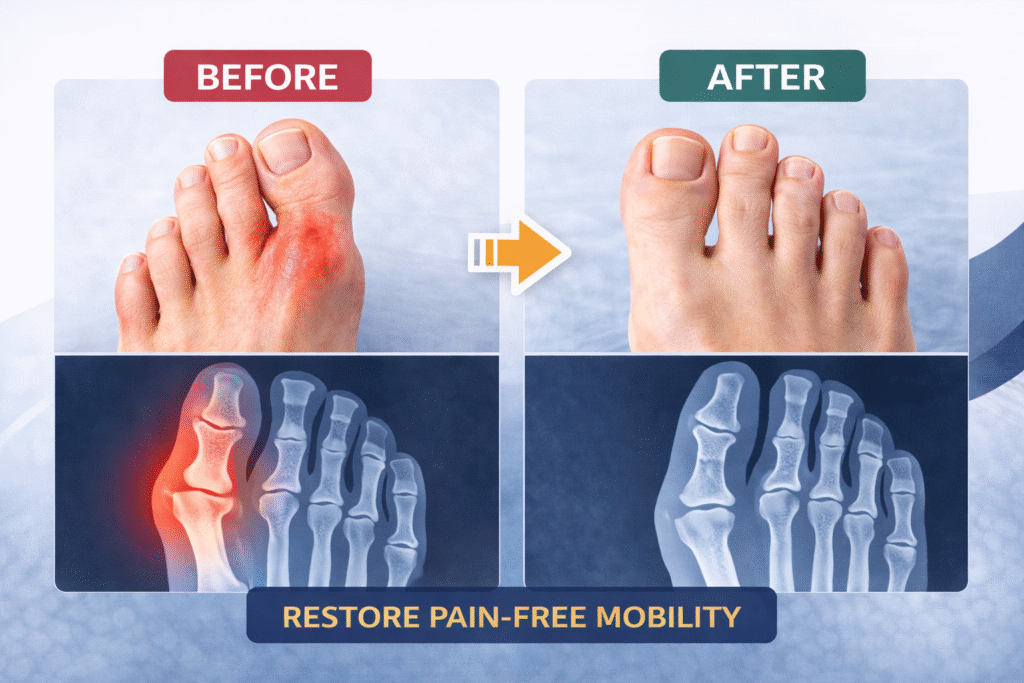
Before and After Results
Before Treatment:
Bent second toe
Pain while wearing shoes
Recurrent corns
Limited walking distance
After Treatment:
Straightened toe alignment
No painful pressure points
Improved foot balance
Comfortable walking
Follow-up X-rays confirmed proper joint alignment and stable correction.
Key Insights from This Hammertoe Case Study
Early diagnosis prevents rigid deformity
Weight-bearing X-rays are crucial for treatment planning
Conservative treatment works in mild cases
Minimally invasive surgery offers long-term correction
Structured rehabilitation improves outcomes
Patients searching for “best hammertoe treatment in Chennai” or “foot and ankle specialist near me” benefit from personalized, evidence-based care.
Conclusion: Expert Hammertoe Treatment Restores Mobility
Hammertoe should not be ignored when pain interferes with daily activities. This case study demonstrates how timely orthopaedic care and minimally invasive surgery helped restore proper toe alignment and eliminate chronic pain.
With advanced foot and ankle treatment in Chennai, patients can regain mobility, comfort, and confidence in their daily lives.