'%3E%3Ccircle%20r='92'/%3E%3Ccircle%20fill='%23fff'%20r='80'/%3E%3Ccircle%20r='16'/%3E%3Cg%20id='c'%3E%3Cg%20id='b'%3E%3Cpath%20id='a'%20d='m0-80%203%2048L0-8-3-32M21-77%2011-30%202-8%205-32M40-69%2019-26%204-7%2013-29'/%3E%3Cuse%20href='%23a'%20transform='scale(-1)'/%3E%3C/g%3E%3Cuse%20href='%23b'%20transform='rotate(45)'/%3E%3C/g%3E%3Cuse%20href='%23c'%20transform='rotate(90)'/%3E%3C/g%3E%3C/svg%3E)

Foot pain is one of the most common complaints among adults, and it is frequently caused by thickened patches of skin that develop in response to excessive friction. While they are your body’s natural way of protecting underlying tissue, corns and calluses can quickly transform from a minor nuisance into a source of severe, debilitating pain.
If every step you take feels like you are walking on a pebble, it is time to address the underlying issue. In this comprehensive guide, we will explore the differences between these two conditions, why they form, and the most effective corns and calluses treatment options available to help you walk comfortably again.
Understanding the Problem: What Are Corns and Calluses?
Many people use the terms interchangeably, but corns and calluses are distinct dermatological and podiatric issues.
Corns are small, defined circles of thickened skin that typically develop on the tops and sides of toes, or between them. They usually have a hard center surrounded by inflamed skin. Because they often press directly on underlying nerves, corns can be exquisitely painful when pressure is applied.
Calluses, on the other hand, are larger, flatter, and more spread out. They rarely have a hard center and are usually found on the weight-bearing areas of the foot, such as the heels, the balls of the feet, or the sides of the big toes. Calluses are generally less painful than corns, though they can become uncomfortable if they grow too thick or crack.
The Root Causes: Why Do They Develop?
Both corns and calluses are the direct result of repetitive friction, pressure, or irritation. Your skin thickens in these areas to protect itself from blistering or tearing. The most common culprits include:
Ill-Fitting Footwear: Shoes that are too tight compress the toes together, leading to corns. Shoes that are too loose allow the foot to slide and rub against the interior, causing calluses. High heels are particularly notorious for placing excessive pressure on the forefoot.
Going Sockless: Wearing shoes without socks deprives your feet of a crucial layer of cushioning, leading to direct friction against the skin.
Biomechanical Issues and Foot Deformities: Conditions like flat feet, high arches, bunions, or hammertoes alter your gait and distribute weight unevenly, creating highly localized pressure points.

“Early diagnosis and guided rehabilitation are key to successful recovery.”
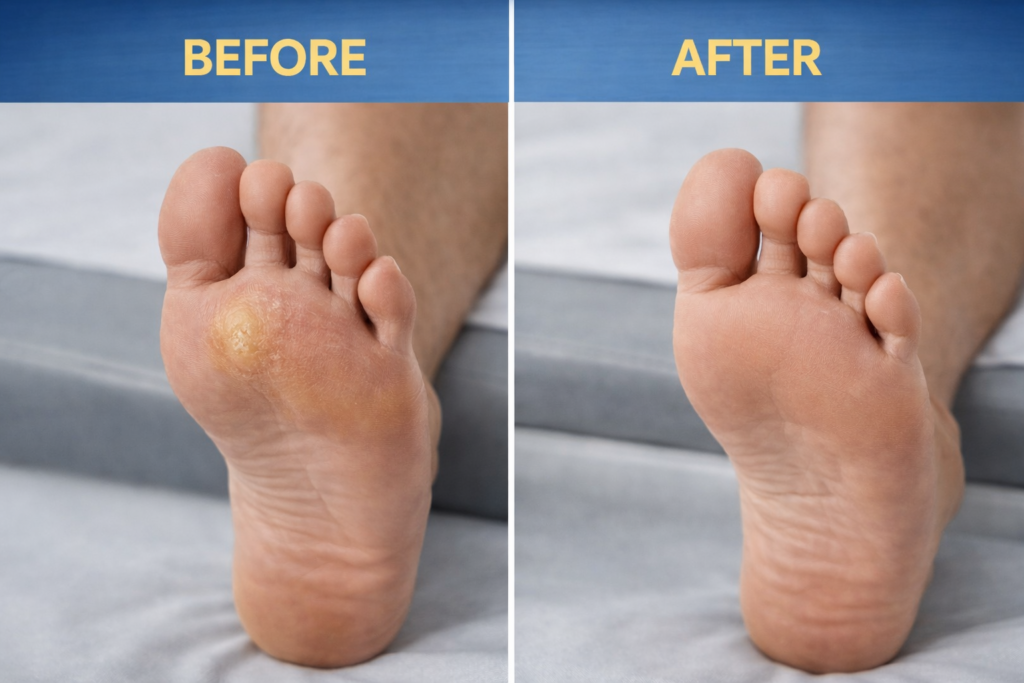
The right approach to corns and calluses treatment depends on the severity of the condition and your overall health.
Safe At-Home Management
For mild, painless corns and calluses, simple at-home care may be sufficient to reduce the thickened skin:
Warm Water Soaks: Soaking your feet in warm, soapy water for 15 to 20 minutes softens the thickened skin, making it easier to manage.
Gentle Exfoliation: After soaking, gently rub a wet pumice stone or foot file across the affected area to remove dead skin cells. Never scrub forcefully.
Deep Moisturization: Apply a thick, hydrating cream or lotion containing salicylic acid, urea, or ammonium lactate to help break down the hard skin over time.
Protective Padding: Use over-the-counter moleskin or doughnut-shaped adhesive pads to surround the corn or callus, relieving direct pressure from your shoes.
When Medical Intervention is Necessary
If your corns or calluses are deeply rooted, highly painful, or if you have an underlying health condition like diabetes or poor circulation, you must seek professional medical treatment. A podiatrist or orthopedic specialist can offer:
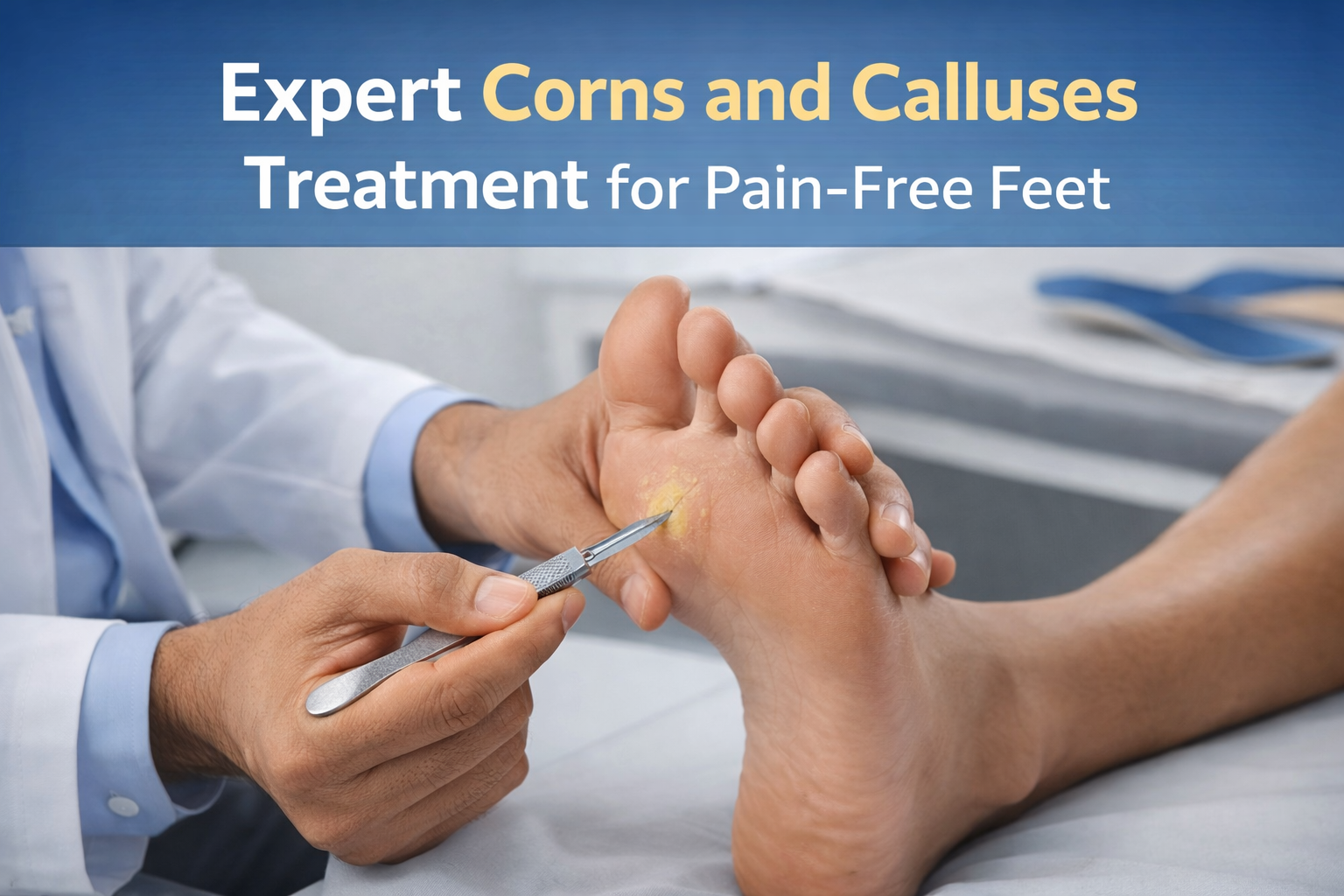
Professional Paring: A doctor can safely use a sterile surgical blade to pare down the thickened skin. This provides immediate pain relief. Never attempt this at home, as it can easily lead to severe infections. Get an Expert Advice
Custom Orthotics: If a biomechanical issue is causing the friction, a doctor can prescribe custom-molded shoe inserts to redistribute your weight and correct your gait.
Prescription Medications: Stronger topical treatments can be prescribed to safely dissolve the keratin buildup.
Surgical Correction: In rare, severe cases where a bone deformity (like a hammertoe) is the root cause, minor surgery may be recommended to correct the bone alignment and permanently eliminate the pressure point.
Preventing Future Foot Issues
The absolute best corns and calluses treatment in chennai is prevention. To keep your feet smooth and pain-free:
Always buy shoes at the end of the day when your feet are slightly swollen to ensure a proper fit.
Ensure there is a half-inch of space between your longest toe and the front of the shoe.
Wear supportive, moisture-wicking socks.
Maintain a daily foot care routine that includes washing and moisturizing.
Do not let foot pain limit your mobility. By understanding the causes and seeking appropriate treatment, you can protect your feet and step with confidence.